Those
whose bodies were excavated during construction of the Metro Gold
Line's Eastside extension and then reinterred at a nearby cemetery in
Boyle Heights are honored with a memorial wall and garden.
An unsavory chapter of local history was closed Saturday with the
dedication of a memorial wall and meditation garden to honor the Chinese
laborers and others whose forgotten graves were excavated during
construction of the Metro Gold Line's Eastside extension
The
somber ceremony included a traditional Chinese blessing and multifaith
prayers for the recently reinterred remains of people who had been
buried in a potter's field adjacent to Evergreen Cemetery in Boyle
Heights.
After years of sometimes tense negotiations involving the Metropolitan
Transportation Authority and Los Angeles County, the remains were moved
to a burial site in the cemetery near an existing Chinese shrine.
A curving, low-slung commemorative wall was dedicated Saturday, finally
ending the relocation saga of the ancestors of many in the local
Chinese American community.
Gordon Hom, president of the Chinese
Historical Society of Southern California, said the ceremony provided
some closure on painful reminders of a time when family members had few
civil rights.
"There has been discrimination," Hom said. "But
instead of harping on it, we've tried to prove people wrong. The same
for this situation. It's taken time, but it's been resolved."
More than five years ago, the MTA discovered 174 burial sites with
remains of what were indigent Angelenos and Chinese workers. The
ethnicity of the laborers was determined through forensic analysis and a
trove of artifacts buried with them, including coins, buttons, jade and
porcelain.
The historic items were the subject of some
disagreement in the Chinese American community. Older people wanted to
honor the tradition of including money, a teapot or rice bowl in the
grave with their loved one. The sentiment among the younger generation
was that the objects were invaluable because of their history and for
educational purposes.
According to Daisy Ma, president of the
Chinese American Citizens Alliance — who buried her father's beloved
mah-jongg set with him — the matter was settled by the MTA, which placed
the artifacts in the recently dug graves.
She too doesn't dwell on the frustration of how her ancestors were treated.
"Life is too short to carry that around," she said. "At least we got them off the streets and out of potter's field."
The burial site has one piece of unfinished business: The gravestones
for some of the plots have not been put in place because of a mix-up
with carving the Chinese characters.
No big deal, Ma said. "I turn it around and see the positive: We're finally in there."
A
Chinese historical group plans to purchase and restore two Victorian
houses as part of a nearly $2-million project to develop what could
become Chinatown's first heritage and visitors center.
"This can
be seen as one part of the overall concept of developing cultural
resources in Chinatown," said Eugene Moy, building committee chairman
for the Chinese Historical Society of Southern California. "There's a
need for smaller and quality (cultural) facilities."
The
nearly 20-year-old historical society recently opened escrow on the
houses at 411 and 415 Bernard St., at the northern end of Chinatown near
the Pasadena Freeway.
To finalize the $375,000 purchase, the
group needs to raise $18,750 by November to make the first payment on
the 10,000-square-foot property, Moy said. The houses are on adjoining
lots; one is vacant and the other is leased by a property management
firm.
The society has developed a three- to five-year plan for the
project, estimated to cost between $1.5 million and $1.9 million. After
restoring and seismically upgrading the two wood-framed buildings,
society members want to open the house at 411 Bernard St. as a heritage
and visitors center, he said.
Built in 1886 by French immigrant
Philipp Fritz, the house would reflect Chinese history in Los Angeles as
well as the Latino, Italian, French, Croatian and African American
ethnic mix that once populated Chinatown, Moy said. One room would be
dedicated to the Fritz family; the immigrant's daughter Louise M.
Whiting lived in the home from 1892 until her death in 1992, and the
family still owns the property.
That building would also become
the permanent site for the Chinese Historical Society, which now leases
space in the Phoenix Bakery building in Chinatown, Moy said.
Once open, the center could establish a renewed interest in Chinatown and boost its economy, society members said.
"This is going to be an information center for our educational purposes," society President Irvin Lai said.
The
society plans to lease the second house, built in 1892, and would like
to see it turned into a bookstore and coffee shop. The final phase of
the project would entail construction behind both houses of a
three-story, 6,000-square-foot building for cultural education classes,
Moy and Lai said.
A courtyard between the new structure and the
two Victorian houses would include some kind of artwork to recognize
early Chinatown pioneers, they said.
The society hopes to help finance the project by expanding its fund-raising efforts beyond the Chinese community.
"The
significance of this location goes beyond Chinese history," Moy said.
"It really goes into Los Angeles history. So we hope to bring in the
general public of Los Angeles."
BOYLE HEIGHTS : Group Works to Save Chinese Shrine
Every
time Randall Bloch visits the corner of Evergreen Cemetery where a
historic Chinese cemetery shrine stands, he becomes more discouraged.
The
shrine, twin furnaces and the remains of a stone altar built to honor
the dead and send them on to the next world, was built in 1888. The
cemetery's owners were going to bulldoze it to make way for new graves
when Bloch learned of the plan and notified the Chinese Historical
Society of Southern California.
The
society persuaded the city in 1990 to designate the site as a
historical monument, protecting it for one year. Last year, the society
bought the site and 42 surrounding graves for $14,000, half of owner S.
F. Montgomery's original asking price.
But the toughest task of
preserving the monument may lie ahead. The society is raising money to
protect the shrine with a retaining wall, preserve what is left of it
and then restore it.
"I'm very concerned that the monument
continues to deteriorate," Bloch told the city's Cultural Arts Planning
Commission in a meeting Wednesday at the Boyle Heights Senior Citizens
Center. "I'm concerned that every time I go out there, I notice a little
more crumbling of the monument and a little more graffiti and beer
bottles."
Bloch had come to the meeting with other members of the
historical society to plead for money for the preservation project, but
commission members said they had none to give.
The society has raised $7,000 in private donations and estimates the work will cost $45,000 to $50,000.
The
shrine has not been used for ceremonial purposes since 1965, but held a
sacred significance to the city's Chinese community when it was built,
said Irvin Lai, a member of the historical society board of directors
and past national president of the Chinese-American Citizens Alliance.
The
80-acre Evergreen Cemetery was founded in 1877 and contains the graves
of naturalist John Muir and Biddy Mason, a slave who was freed in
California and is one of founders of Los Angeles' First African
Methodist Episcopal Church. The section that contains the shrine was
used to bury indigents: Chinese-Americans were charged $10; everyone
else was buried free.
In a ceremony that dates back centuries,
relatives and friends of the deceased would burn incense and offer
roasted pig, chicken, Chinese tea cakes and other food and wine on the
altar to the spirits.
"They opened the (furnace) door and burned
paper money and burned their clothing and a paper television or a paper
car," Lai said.
After the ceremony, the family would eat the food.
Every year, they would return on a special day to clean the grave site,
plant flowers and remember their loved ones.
The shrine is
significant because it is the earliest evidence of a Chinese community
in Los Angeles, said Sue Ellen Cheng, curator of El Pueblo Historic
Monument, which has plans for a Museum of Chinese American History at
the Garnier Building on Olvera Street.
Lung Gow Yee August 28,
1928 - August 4, 2012 Lung or "Tommy" was born in Hoiping located in
the Toishan region of Southern China. It was
there where he developed his enduring strong work ethic and a life long love of
sports. As a child, he would work alongside his parents, Fong Yit Hong and Wing
Tong, cultivating rice on their plot of land. The waterways of the Pearl Delta
provided many opportunities for him to become an avid swimmer and participate
in dragon boat races. The family would briefly move to Shanghai. With his father serving in the US Army during World War II, the family moved to
the United States.
They would call San Francisco their new home
where Lung graduated from Galileo
High School. Soon
thereafter, he followed his father?s footsteps and joined the US Army. He
served in the military for three years and was primarily based in Japan. During
leaves, he would often take trips to Hong Kong.
It was in Hong Kong where he met his wife
Nancy, who he married. The two of them adored each other and went on to spend
58 happy years together. After his tour of duty, Lung returned to America with his bride to help his parents and
brother, Everett, establish a laundry business in Santa Cruz. It was there that the ever-loving
couple began their own family and welcomed their first child and daughter,
Emma, into their arms. The three of them would later move to Los Angeles, where they created a loving and
supporting home for the next 55 years. The family continued to grow in Los Angeles. Lung and Nancy were blessed with
three more children: Victor, Annie and Timmy. Lung would also start a new career
as a restaurateur in Los Angeles.
He was a well known waiter working at the Man Fook Low restaurant. Lung took
his years of restaurant experience and opened his own restaurant in Encino
called, House of Yee. Always looking for more challenging ventures, he decided
upon a career change and opened Sunshine Printing for over 30 years, a
successful printing and stationery store that included the first US Post Office
within Chinatown. After years of working, Lung
decided to retire and spend more time with his family especially with his
grandchildren, Michelle and Michael. Lung planned daily outings to bring the
family together. These outings included going to the movies, sharing his love
of the Cantonese opera or simply having the family get together for a meal. He
also wanted to spend more time pursuing his interests in sports and travel. He
loved the San Francisco Giants and 49ers and watched as many games as possible.
He also watched the games in person by visiting San Francisco often. When his teams made it
to the championships, he was there too. He went to see two Superbowls. He also
loved to travel throughout the world. He took his family on trips to Hawaii, Guam, Hong Kong, Okinawa, Taipei,
Macau, Tokyo and Beijing. As much as Lung enjoyed traveling to
exotic places, some of his favorite journeys were the simple road trips around
America in the family station wagon, especially when going back to visit Santa
Cruz. He loved being around his family and these trips are some of the fondest
memories they have of Lung, a loving Husband, Father and Grandfather. He went
on his final trip and is at his destination right now. He is in heaven where he
is probably swimming the rivers of Toishan, with his parents proudly watching
him speed along the waterways. Lung is survived by his loving wife Nancy;
children Emma, Victor, Annie (Stanford) and Timmy; grandchildren Michelle
(David) and Michael; brother Everett (Lane). There will be a viewing on
Saturday August 11, 2012 3:00PM-5:00PM and a service will be on Sunday August
12, 2012 2:00PM at Universal Chung Wah Mortuary, 225 N. Garfield Avenue, Alhambra
CA 91801.
Lung was loved by all who knew him. We will miss him dearly.
Published in the Los Angeles Times from
August 10 to August 11, 2012
We lead off with another unheralded and virtually unknown hero who
had undertaken many dangerous missions and along the way saved many
lives. He is 95 year old Captain Moon Chin who is not a military
officer, but was an airlines Captain who began flying when he was 20
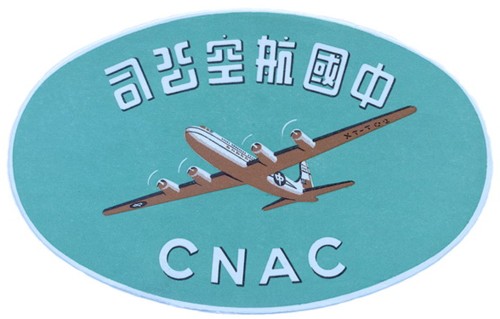
years old left the US to join the Chinese National Aviation Corporation
(CNAV), a subsidiary of Pan American Airlines which then was taken over
by the Chinese Nationalist Air Force in partnership with the US
government. Chin rescued many US Army Air Corps personnel, US Air Force
air crews, and hundreds of civilians fleeing the Japanese military
advances in China and throughout SE Asia. In 1942, he air evacuated Lt
Colonel James Doolittle (which enabled Colonel Doolittle to eventually
become General [4 star] Doolittle) who had just bombed Tokyo and was
being ferociously pursued by an angry Japanese ground forces. Chin flew
Doolittle to safety in Calcutta. There were many American and a few
Canadian pilots who joined CNAV to help the war effort against the
Japanese invaders, but Capt Chin was the only volunteer pilot who flew
from 1933 until the end of WW II. He personally mapped the Himalayas
(the so called ‘Hump’) which had to be used to transport fuel and
supplies to the resistance as the Japanese had cut off all other
logistics routes. Be sure to read his bio for other heroic stories
about Capt Moon Chin and how he was credited with military service even
though was never in the military.
Following Capt Chin, we have another unheralded heroic veteran, US
Air Force Colonel Richard F. Hum, who served three wars, WWII, the
Korean War and Vietnam. Hum’s major contribution was actually during
the Cuban missile crisis in 1962 when he personally briefed then
President John F. Kennedy on the significance of the surveillance
photographs taken from U-2 and other platforms which revealed the
Russian ICBMs and ground support equipment that had been installed in
Cuba and a real military threat to the national security of America. In
his military career, Colonel Hum received 5 Legions of Merit awards, an
extraordinary achievement and unmatched at the time.
Next, we have another unknown and forgotten hero, Major Arthur Chin
(a colleague, but not a relative of Capt Moon Chin), who was also a
volunteer to left the safety of Portland, Oregon, to become a fighter
pilot hunting for Japanese Zeroes. He found a few, and shot down eight
(8) Japanese fighters, becoming the first American Ace, but this was
before Pearl Harbor, and the US had not officially started fighting
Japan, so his heroic battle achievements are absent from US military
records. Chin suffered severe burns over much of his anatomy after a
crash landing and had a difficult life after the war.
Our next heroic veteran has been introduced before but that was
because of his civilian service as the first Chinese American judge.
Judge Delbert Wong, before his civil service, was a World War II
navigator on B-17 bombers who flew 30 bombing missions into German
territory. In his class of 30 navigators, only two survived their high
risk bombing missions.
Our last hero for this week was also introduced before, and she is
Ms. Heidi Shyu who was appointed Chief, United States Air Force
Scientific Advisory Board, reporting directly to the US Air Force Chief
of Staff and Secretary of the Air Force. For a woman and an Asian woman
to hold such a high level technical position is most unusual. That
person would not only have an extraordinary scientific mind, but also be
extremely capable to manage and successfully complete the complex
systems development requirements of the US Air Force. Her span of
control would have included the most advance aircraft and unmanned
aircraft developments, but also space communications, computer systems
and other highly classified projects requiring more than a Top Secret
clearance.
Today, Chinese American scientists and engineers comprise about 15%
of the technicians and engineers in our national laboratories including
research centers like the Stanford Linear Accelerator Center. With
parents who strongly encourage their young people to study hard and
study math, Chinese Americans will continue to make more than their
portion of contributions to our nation’s scientific leadership and keep
our national security strong.
For additional information about Chinese American heroes, please visit the website at www.chineseamericanheroes.org . Name in English: Moon Fun Chin
Name in Chinese: 陈文宽 [陳文寬] Name in Pinyin: Chén Wénkuān Gender: Male Birth Year: 1913 Birth Place: Toisan, Guangtung, China
Rescue Pilot honored by Congress Profession(s): Aircraft Mechanic, Pilot, Airline Executive Education: 1930, Public School 18, Baltimore, MD; 1933, Commercial Pilot License, Curtis Wright Flying School, Baltimore, MD. Award(s): 1995 Distinguished Flying Cross; 1995 Air
Medal; Presidential Unit Award; World War II Victory Medal;
Asiatic-Pacific Campaign Medal with 1 silver star, United States
Government. Contribution(s): At the age of 20, Moon Chin went to
Hong Kong and joined China National Aviation Corporation (CNAC). He
was initially a copilot, then became a captain in 1936 and flew
transport missions before and during WW II. He charted and flew many
dangerous flights over ‘the Hump,’ the Himalayas, which are the highest
mountain ranges in the world. In March 1942, he safely evacuated Lt
Colonel James Doolittle from Kunming in China, transiting from Burma to
Calcutta in India after the famous Doolittle bombing raid on Tokyo.
Moon and the other brave Hump pilots, both civilian and military, took
tremendous risks delivering the critical war materials that helped stop
the Imperial Japanese military attempt to conquer China and South Asia.
Flying in unarmed cargo planes with minimal communications, limited
navigation tools, and flying missions in bad weather or at night to
avoid Japanese fighters, many hundreds of flights disappeared, the only
sign of their passing being the wreckage littering countless Himalayan
mountainsides. Moon and his colleagues were truly brave heroes.
Moon Chin also rescued many US Army Air Corps, US Air Force, and
Republic of China (Taiwan) Air Force crew members oftentimes during very
dangerous periods of open war such as during WWII or the secret battles
of the Cold War up until 1955. His most daring rescue occurred in 1954
when a US Air Force C-119 crew bailed out over the sea in bad weather
between Guam and Taiwan. Chin, then the Chairman of the Board for Fu
Hsing Airlines, personally flew a PBY Catalina flying boat, found the
crew, landed in the water, and rescued 6 of them in stormy sea
conditions. Two USAF amphibious aircraft at the scene had refused to
land due to the turbulent waters, but Chin ignored the danger and landed
anyway. The rescue effort took over 5 hours because landing and
taking off again was so difficult. One of the rescued air crew, Major A
W Gristad, described Capt Chin’s skill in landing and taking the
seaplane off as “the best piece of flying I have ever seen. Captain Chin
truly lived up to his reputation as the best ‘water man’ between the
West Coast of America and the China coast.” Joining in the praise of
USAF aircrews, General William Chase, Chief of the Military Advisory
Group at the US Embassy in Taipei added his own commendations to Chin.
Much later, by US Senate resolution, Capt Moon Chin and other Hump
pilots received the Distinguished Flying Cross and Air Medal in 1995.
As a sign of the tremendous respect felt by the US military for him,
Moon was credited for US military service from 1941-1945, even though he
never served in the military.
EARLY AVIATION IN CHINA:
Captain Moon F. Chin Recalls his Experience with the
China National Aviation Corporation
The San Francisco Airport Museums Oral History Program was initiated in
1997 to preserve first person accounts of the development of aviation.
Transcribed oral history interviews are placed in the San Francisco
Airport Commission Aviation Library and Louis A. Turpen Aviation Museum
where they are catalogued and made available for use by scholars,
historians, and the public. The Oral History Program serves to increase
awareness of historic achievements in aviation by documenting this
legacy for the benefit of current and future generations. For its 2003
annual giving, the San Francisco Aeronautical Society began underwriting
the San Francisco Airport Museums Oral History Program.
The following edited excerpts are from oral history interviews conducted
with Capt. Moon F. Chin between February 2nd and March 5th of 2004 by
Mauree Jane Perry of Making History Associates. The full transcript will
be available to the public at the San Francisco Airport Commission
Aviation Library and Louis A. Turpen Aviation Museum.
Capt. Chin began his flying career with China National Aviation
Corporation (CNAC) in 1933 as a copilot on the Shanghai–Peking route. He
became a captain in 1936 and flew transport missions before and during
WW II that included flights over the Himalayas—a region known as “the
Hump.” He joined the Central Air Transport Corporation (CATC) in 1946 as
head of operations where he acquired aircraft, hired and trained flight
crews, and initiated operations on Mainland China. CATC became part of
Civil Air Transport (CAT) of Taiwan in 1947. In 1964, Capt. Chin founded
Foshing Airlines with service from Taipei to Taitung.
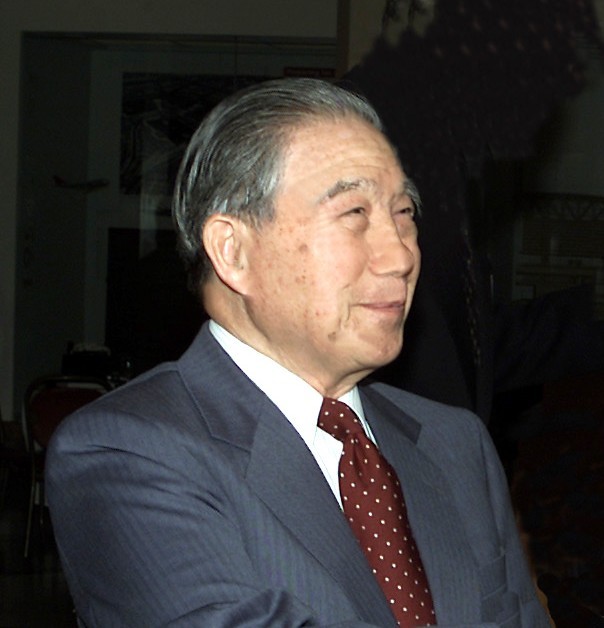
Moon F. Chin - Spring 2004
Photograph by Gabriel Branbury
Mauree Jane Perry: How soon after you started working for CNAC did you begin flying the actual Shanghai–Peking flight?
Capt. Moon F. Chin: Well I applied for the job in January 1933,
and I joined March 1, 1933. I think I waited two months. I had to start
work as a mechanic since I had experience as a mechanic. So from the
first of March until the middle of the month when we started flying to
Peking, I worked everyday on the airplanes as a mechanic. Even after I
started flying to Peking and back, I still had to work as a mechanic
until I was transferred from land planes to seaplanes.
Q. What navigational tools did you use in 1933?
A. We didn’t have any. (Laughing) No navigation—no instrument
flying. In fact, in those days we didn’t have autogyro, we didn’t have
directional gyro. Later I learned by myself what we called
“one–two–three.” You only look at three instruments: the air speed, the
climb indicator, the bank and turn—you know the ball and the needle.
That’s all we needed. We had oil pressure and gasoline, but those had to
do with the engine. I’m talking about flying. We had a compass, of
course, the bank and turn, and the air speed. So you watch the three
instruments. You start with the air speed. Then you go to climb
indicator, then you go to the bank and turn. (Laughing) So you keep
going around. See, what I learned mostly on instrument flying was when I
flew from Chengtu [now Chengdu] to Chungking [now Chongqing]. I became a
captain in 1936. Every chance I had I tried to fly one–two–three. We
called it that because you looked at one instrument going round so you
keep the air speed, the climb indicator, and the bank and turn—and once
in a while you look at compass to see the direction you’re going in.
Q. So after you became a captain in 1936, where did you fly?
A. I flew everyday between Chengtu and Chungking. In the morning
I would take off from Chengtu to Chungking and then on to Hankow [now
Hankou]. After the Hankow plane came in with the Loening the next day, I
would carry those passengers back to Chengtu. The DC-2 used to fly from Shanghai to Hankow to Chungking to Chengtu. That’s what I did for one year.
Then, around 1938, I was sent to Shanghai. They gave me two weeks leave
to go to Hong Kong. When we returned after one week, that’s when the
trouble started in Shanghai. Then I left for Nanking [now Nanjing] and
never went back to Shanghai until 1945. So after Shanghai was bombed [in
1938] I went back to my old route.
Only sometimes I would fly to Rangoon or wherever they wanted. Sometimes
to Hanoi. Sometimes I would fly to Guilin on that peculiar plane, the
Dolphin, a stagger wing Beechcraft, a British twin-engine plane. This
place was very hard to go to—all mountains, and the weather was very
bad.
Q. So you would wake up in the morning and not know where they were going to send you to fly that day?
A. When I used to fly, before Pearl Harbor, I was based in
Chungking. When the planes came in from Hong Kong, I would either go
with them as a copilot or I would take the plane back from Rangoon or
Hanoi. Then the pilot would take them back to Hong Kong.
Q. When did you start flying to Hong Kong?
A. Oh, that’s after Hankow was lost in 1938. Before Hankow was
lost, I was stationed in Chungking I was just flying a seaplane from
Chungking to Hankow.
Q. You liked your work? You were flying as a copilot or pilot.
You went all over southeastern China, Burma [now Myanmar], Hong Kong,
Indochina [now Myanmar, Thailand, Laos, Cambodia, Vietnam, and West
Malaysia]. You had different routes, different airplanes to fly. You
were paid. You were married. Were you in danger?
A. I liked my work. I didn’t feel I was in danger.
Q. What about navigation tools. How had they changed?
A. You see, before I was transferred and I was in Chungking, I
was more or less not alone but I did most of the work for the Chinese
Air Force. In the old days, between Chungking and Chengtu, I would fly
to the northwest border with Russia. I would take the pilots or mechanic
to get the Russian fighters. They didn’t have radio, so they depended
on us to lead them-—like a bird following the goose. We had the radio,
and we had the Telefunken directional finder. The fighter planes’ range
was very short. So we would lead them to this airfield. I circled until
the first squadron refueled. Then, when they were ready to take off, the
second squadron would go down and refuel. If there was an air raid,
then I would just wiggle my wings and make a circle and go towards
Chengtu. At the same time, there would be a signal on the field that an
air raid was going on. They couldn’t land until the refueled planes were
coming up.
One time I was supposed to lead a bunch of Russian bombers with Chinese
pilots to Guilin. They asked me to go to Chengtu and pick up some
drop-able tanks, made of bamboo. They put them under their wings to get
longer range. When they finished using that gas, they just dropped them
because they didn’t have use for it anymore. Because they didn’t have
metal, they made the extra gas tanks out of bamboo.
Q. Let’s talk about some of the various planes you flew.
A. The first plane I flew for CNAC was the Stinson. It was the
biggest plane I had flown at that time. Five passengers plus the pilot
and copilot. It was a high wing. Before they had the smaller tires,
later they had the balloon tires because they could land on paved field
where you have soft mud and things like that. It moved better than the
regular tire. And then the next plane I flew was the seaplane, an
amphibian Loening that flew from Shanghai along the Yangtze River.
Q. Was it difficult to learn to fly a seaplane?
A. No. The flying is all the same except when it lands in the
water. In a seaplane you pull back on the controls to get the plane on
the step, they call it. In a land plane you can drive forward to get the
tail up. But in a seaplane, you have to get up on the step and once you
are on the step, then you fly it like a regular plane.
Q. Did you have a preference?
A. Not exactly, but before you got on a seaplane you learned how to
sail a boat. That was part of the training, because when you are on the
water you have to learn about the wind and the current. On the Yangtze
River you have downward flow. So they gave us a little sailboat, and we
learned how to go downwind, crosswind so that when you get on the
seaplane, it is the same thing as on a sailboat. If the wind is stronger
against the current, you go into the wind. But if there is no wind,
then you go downstream with the flow of the water. If the wind is strong
enough and with the water, then you go against the current and into the
wind.
You practiced in the little sailboat on the river. The only time you
have current like that is only when it is high tide or low tide. So when
it's low tide, maybe you go against the wind, so you have to practice
different times of the day. It’s very good. When you have the engine
off, you are drifting against the current. If the engine is dead and you
have no power, you have to find a way to get the plane to drift so you
get onto a corner where you beach the plane. You drift awhile and later
on you get going. Later on they added a little rudder in the water, and
then we had a cable.
As a copilot the only thing you had in terms of training was when the
pilot was taxiing. You had to lie on your belly on the lower wing and
when he approached the floating drum you had to grab that rope and tie
it on to the side of the hull, and he would cut the engine when you
signaled that you got it fastened. Sometimes he would go too fast, and
you couldn’t hold on to it to get the rope wrapped around. So he
wouldn’t cut off the engine until he was sure that you had the engine
tied.
Being a copilot in the wintertime was terrible because it was so cold.
Lying down on your belly, you’d get all wet. Afterward you got up with
the wind blowing and the propeller blasting; you know, you could feel
your hands getting frozen.
Q. How many captains were there at CNAC in 1938?
A.Not many. About four American and four Chinese captains. C. L. Sharp was No. 1. Then there was Woody and Pottschmidt.
At that time I was flying the seaplane between Hankow and Chungking.
They were flying the land planes. So we would meet each other during
different times. Two of us flew the Commodore. Sometimes we flew the
Douglas Dolphin.
Q. You liked the Dolphin? It had 8 seats and flew 140 miles per hour, and had a range of 720 miles.
A. That was much better than the Commodore.
That only went 110 miles per hour. Maybe less. We used to say it took
off, landed, and cruised at the same speed. (Laughing) The Dolphin was a
good plane to fly. But I remember that every time we landed I had to
walk down the top of the wing spar and push the nail back in. The wing
wasn’t metal; it was plywood covered, no fabric. It was glued, of
course, to the metal frame and rib. After so long, the wing would start
flapping. So after we landed, when we would go up on the wing to gas the
plane, we’d walk down the spar to push the nail back in. Actually, the
nail was not doing any good. It was the glue holding it together.
Q. So you were based in Chungking during the war. The question is why were you even flying all the way to the Russian border?
A. Because we flew to Yining. That’s where the Russians brought
the planes over to China. In 1937–38 the Russians flew the planes
themselves. But later on, they didn’t have the pilots. They just sold
the planes to the Chinese. They didn’t fly over. The Japanese were
protesting over this.
So the planes would come from Moscow and would land over on the Russian
side. Then they would pull them by hand over the Chinese border and they
would tow them down to the airfield here. The airfield is closer to the
border actually. I remember when I flew there the town was not much.
Yining is the Chinese airfield on this side, and this is the Russian
airfield on the other side. Alma Ata is the Russian base. SAS used to
fly in and out of and stop there on the way to Scandinavia. Anyway,
before we used to go from Chengtu. Lanchow [now Lanzhou] and Chengtu and
Chungking.
The Chinese Air Force was in Chengtu. Chungking was the wartime capital.
Xi'an is here. This is the area where they tested the atomic bomb. This
is the end of the Great Wall, the end of the Himalayas that goes all
the way to the Great Wall. Hami is here. Turpan is the second lowest
place in the world. Below sea level. But the mountains here are over
15,000 or 16,000 feet.
Q. Had these western routes [across the Northwest Frontier] you flew ever been flown before?
A. No, never before.
Q. So how did you know where the mountains were and how high
they were? When you chart a path in such difficult territory, how do you go about it?
A. First he [C. L. Sharp] gave me the report. They took off from
Peshawar, the northwest frontier of India at that time. He described
this area. He was already flying around 30,000. The B-24 can go up that
high. But we could only go around 20,000 feet. After he couldn’t see
Yarkant, he said he followed the Yarkant River. There were sandstorms.
This area is all desert.
Q. What is it that you did that the B-24 couldn’t do?
A. They started from India, trying to survey, and they couldn’t see so they turned back.
Q. I see because of the dust storms and because they were so high up in a B-24. But you were in a DC-3 and could stay under the clouds? When you chart a path, what do you do?
A. We studied where the path was so we could get through. There
are three paths we could get through. We only looked at the one path,
but we could see the other side, and we went through it. If we couldn’t
see the other side, we didn’t go through. (Laughing) There is another
pass near Afghanistan. After Afghanistan there is Russia, so there are
four countries that touch.
So, in the summer of 1942 we went south to New Delhi, then to Karachi,
then to the northwest frontier near Peshawar, what they called in the
old days, the Northwest Frontier. It had many troubles before in the old
days. Then we spent the night there. The Air Force gave us dinner. They
all wore gloves, the British. (Laughing)
Q. Where did you get your gas supplies?
A. We still had the U.S. Army with the star and the two bars
indicating it was an American plane. When we left Calcutta we got gas.
We got gas at Kunming, that’s where the Chinese Air Force was. But when
we went there, they didn’t have the high octane.
Q. I wanted to ask you where you were when Pearl Harbor occurred?
A. I was in Hong Kong.
Pearl Harbor was on December 7. But in Hong Kong it was the nighttime
on the 8th. On the morning of the 8th I was still in bed. I saw a
formation of fighter planes start coming down. I thought they were
practicing. From my bed I could see the Pan American Clipper in the
water. I saw the tail of the DC-2
in front of the hangar. All of a sudden I saw water spraying up. They
were machine-gunning that Clipper. But the Clipper had been waiting to
go to Manila, so it had a lot of gas in its tank, and it caught fire
right away. I don’t know if they actually dropped a bomb on the Clipper
or not, I didn’t see. But I saw the DC-2’s tail start to burn, and I saw
the Clipper burn first.
After it was over, I drove my car to the market to buy some rice. I saw
the DC-2 burn up. Then when I got home, I got a telephone call to
prepare to leave that night. The company called me. “Get ready to leave
tonight?” I said, “But all the planes burned up.” He said, “No, one
plane didn’t get hit. We pushed it off the airfield. And the two planes
didn’t come back last night.” So we still had three airplanes, you see.
Q. So now let’s talk about the Doolittle experience. After Pearl
Harbor, Jimmy Doolittle and his sixteen U.S. Army B-25 bombers broke
through Japanese defenses on April 18, 1942, to strike Tokyo and other
cities in broad daylight. It was a daring and dramatic raid. Then he
flew on to China.
A. On my regular flight out of Chungking, we were delayed, and
we didn’t know what the reason was. We saw the American ambassador and
all hanging around. When the party came down and they all got near the
cabin door, we were sitting in the cockpit. I was the pilot. But I
didn’t see who was coming. It was April 1942. Then they got around the
entrance door to the plane, and then I saw people climb up on the plane
and the others got away. They cleared us to start the engine, and we
took off for Kunming.
Less than an hour before we got to Kunming, we got a warning that there
was an air raid going on. So we found an airstrip in the mountains and
we landed there. We landed on this place and we got everybody out of the
plane and we hid in a ditch. We had a crew of four, and then of course
about eight or ten passengers. Doolittle was one of them. The others
were regular passengers. And when I got down, he came next to me and I
saw his name, Doolittle. First I saw his clothes were pretty dirty. When
he came over to me in the ditch, I told him I remembered him back in
1933 in Shanghai.
Then when we got clearance, I got all the passengers on the plane, but
he didn’t get on the plane. He just stood there near the wing tip
talking to me. He said, “Which way are you going to take off?” This
airfield was not level, it was uphill, and we were parked in a down part
of the hill. I told him I was going to take off downwind. Usually a
plane takes off upwind. Then he said, “O.K. If you were going to take
off upwind, then I was going to stay here.” (Laughing) Then of course
there was some telephone wire on a bamboo pole in a ditch or something.
Only a couple of telephone wires. So he said, “What about those?” I
said, “Gee, if we don’t make it we’ll just take the wire with us.”
(Laughing) He got on the plane.
Then when we landed in Kunming, General Chennault was waiting. They
saluted each other and drove away. So when it was time to leave, they
came in and got in the plane. We were supposed to go to Dinjan. That’s
what he thought. But the instruction was to get to Myitkyina, which is
in the northern part of Burma. We were supposed to pick up the radio
operator and the company personnel and equipment because that was the
last day they were going to be there.
Q. Did you know what was happening politically in Myitkyina, that is, that it was under attack?
A. Yes we knew that because we were supposed to pick up the company personnel.
Q. Were you frightened?
A. Oh no. (Laughing) When we were flying we should have been
flying northward, and Doolittle wrote me a little note on a piece of
paper, and he gave it to the radio operator. The operator—no first he
asked the radio operator, “Why are we flying north?” The operator told
him because we were going to Myitkyina. Then he wrote on a piece of
paper that the ambassador in Chungking told him Myitkyina had fallen
that afternoon. I told the operator, no, the company would have warned
me not to go to Myitkyina if it had already fallen. I didn’t pay any
attention to him.
Then when we got to within twenty-some odd miles of Myitkyina, I saw a
plane up in the air on the way to Dinjan. It looked like the last plane.
I couldn’t see what plane it was, but it looked like it was on.
Then when we got to within twenty-some odd miles of Myitkyina, I saw a
plane up in the air on the way to Dinjan. It looked like the last plane.
I couldn’t see what plane it was, but it looked like it was on its way
to Dinjan. Then we got to Myitkyina. We saw all the people leaving the
airfield. That was the last plane. So they all left. A big crowd. They
were trying to get out on that plane. When they saw us approaching they
all returned, rushing back to the airfield because they thought another
plane was coming in for them.
So when we landed, we found out that all the people we were supposed to
pick up had gone on that last plane—the radio equipment and all the
personnel, because we were late. Because of the air raid we were delayed
a couple hours. So the radio operator didn’t know what we were doing.
See, before we got to the airfield, he had disassembled his radio
equipment so he didn’t know what was going on. Then all the refugees
wanted to get on the plane. We started loading them.
Q. Whose decision was it to load the refugees on the plane?
A. Well, they all crowded around. They all wanted to go. We tried to take as many as we could.
Q. So it was your decision?
A. Yes, well, actually Doolittle helped. We had to take the
ladder away because we didn’t want people climbing up. We picked the
older people and the ladies with the kids. In fact, we had a lady get on
board but her husband couldn’t get on board so she jumped back out. He
looked very healthy, see. So she jumped back out.
When we were nearly packed, Doolittle wanted to know what the hell I was
doing. I said, “We do that quite often.” After we were all full, we
closed the door. Then we got everybody out of the way so we could taxi
and take off. I figured that since we had a full load, we shouldn’t go
to Dinjan, so we went direct to Calcutta. We just had enough fuel to reach Calcutta.
Q. And this plane that usually held only twenty-one people held how many?
A. Seventy, I think. Just packed in there. Sitting on the floor.
Standing up. Then we landed. We found when we opened the cargo door we
had another eight people packed in the cargo area. When we landed in
Calcutta, the American embassy people came. Doolittle disappeared. He
didn’t go through customs. He didn’t go through immigration. I didn’t
know what was what. Then the next morning I looked at the paper and read
that he had bombed Tokyo.
Q. You hadn’t known that he had bombed Tokyo?
Nooooo. If I had known, I wouldn’t have taken the chance to go through all that. I had no idea.
Q. You land and you see all the refugees climb out of the plane.
You see the extra people climb out of the cargo, and then you saw that
Doolittle didn’t have to go through customs. Did you say goodbye to him.
Did he say goodbye to you or give you a thumb’s up?
A. No, he waved. I saw him talking to the people meeting him,
people from the consulate. When I read the papers the next day, I said
to myself, he went to all that trouble, and then I almost got him
killed. We talked to each other a couple times, before the war ended and
after the war. We just said hello to each other.
Q. If you had known you were carrying this important man, would you have done anything differently?
A. I wouldn’t have gone to Myitkyina.
Q. But you know the airline, the company, must have known you were carrying Captain Doolittle?
A. They knew he was on board, but they didn’t know he had bombed
Tokyo. Nobody did. See the news didn’t come out until after he left
Calcutta.
Q. What did you do for oxygen if you were flying up to 15,000 feet?
A. In early days we only had portable oxygen. Later the planes
had the low-pressure oxygen system in the aircraft. But we didn’t use it
until 8,000 feet. Usually we didn’t use it until 10,000 feet. In 1943 I
came to the United States, and I flew the DC-4. I was checked out at
American Airlines at La Guardia Airport. I liked this airplane. In those
days it was a big airplane. (Laughing) Of course, any time you have a
big airplane like that there were more things to handle. But it was very
easy, for every Douglas airplane was almost the same.
Then at the end of 1943–44, we had the C-46 Commando. It could go about 1,400 or 1,500 miles.
Q. Where did you fly this transport plane?
A. During the war, CNAC got delivered one or two a month. We
started getting it the end of 1943. When I flew for CATC, we bought nine
of those from the Foreign Liquidation Com-mission. It was like surplus,
planes that were left in Shanghai.
Then the C-47s, I
bought two of those in 1946. They were brand new. Never been flown, just
shipped to India. I bought them for $5,000 apiece. I bought them for
CATC. The company bought them. I bought two of them for training. I used
them mostly flying between Shanghai and Nanking when they asked me to
go to a meeting. These were trainers, not for passengers. We needed them
for training, since we were starting a new company.
Q. Why did you use this particular plane to train pilots for the new company?
A. For basic training. At that time after the war, we figured we
had to train from the ground up. Of course, CATC bought six of the
Convairs. It was the first new plane after the war.
The DC-6 came out right after that. I was checked out on that in 1949.
Q.Who checked you out?
A.We had sent twelve crew over here to train with American
Airlines in Ardmore, Oklahoma. Then, when they ferried the planes back, I
flew back and forth with them on the trips.
Originally when we purchased these planes, they were from Shanghai. But
when we got the planes, Shanghai was almost gone, so we used the planes
between Hong Kong, Taiwan, and Bangkok. Two of the planes arrived, and
they didn’t make a single trip because there was no place for them to
go.
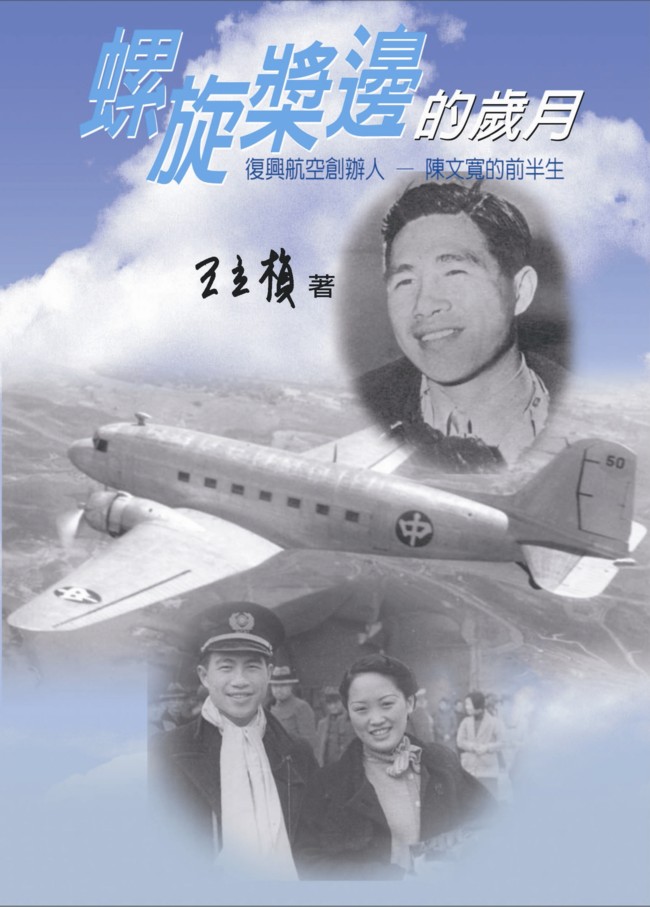
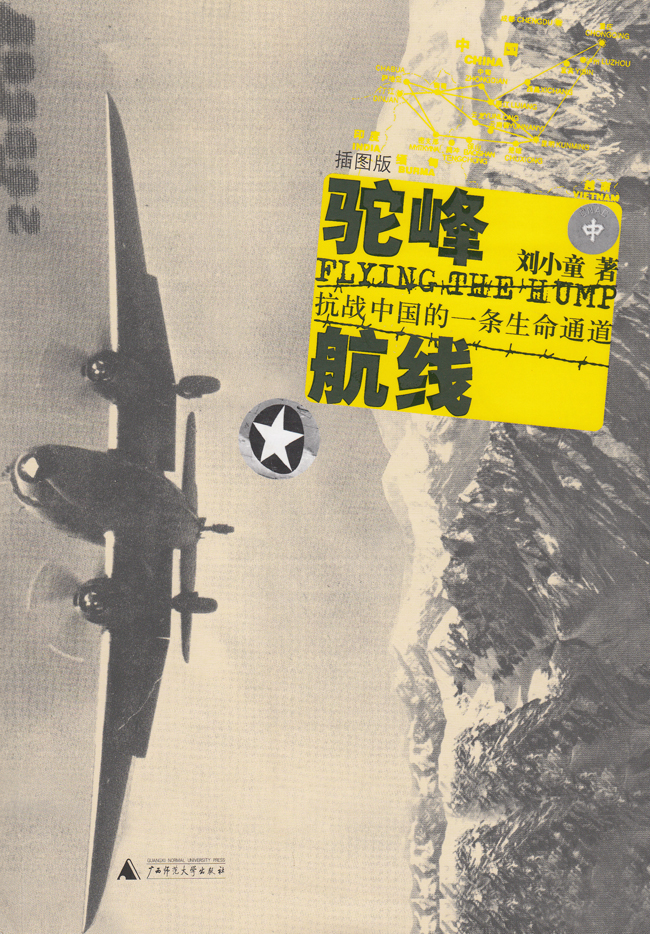
This will be the cover of the book, "The Life Next to the Spinning Propeller" by Li Wang.
The book should be published around Christmas of this year, 2007.
If you would like to share any information about Moon F. Chin
or would like to be added to the CNAC e-mail distribution list,
please let the CNAC Web Editor, Tom Moore, know.
Thanks!
In
the 1880s, Chinese workers who had helped build the transcontinental
railroad settled in an area of Rancho Cucamonga near the present-day
intersection of San Bernardino Road and Archibald Avenue.
They found work in vineyards and farms, digging irrigation channels,
and making fireworks. Hundreds of Chinese immigrants lived in a small
area of town where the present-day intersection of Klusman and San
Bernardino Avenues is today.
Nearly a century ago, a fire burned down the wooden homes the Chinese
workers lived in. Replacement living quarters came in the form of three
two-story clay block structures, that housed dozens of workers each.
All that remains of the former China Town of Rancho Cucamonga is a
single two-story clay block home on the northwest corner of Klusman and
San Bernardino.
Ed Dietl, a member of the Rancho Cucamonga Historic Preservation
Association, wants to preserve a part of this history for present and
future residents. Dietl said he believes the deteriorating building,
which is made of unsupported clay blocks, will eventually fall on its
own in the near future.
"When that happens then we'll have to knock it down because it will
be a health hazard for all the people who try to walk through the area,"
Dietl said.
"What we'd like to do is take it down nicely and
preserve some of the bricks, and build a nice pyramid or corner stone or
something on the property with a brass plaque saying at one time there
was a Chinatown here."
Dietl shared interesting tidbits about the building's history. After
the last Chinese resident left the home in the 1940s, a family moved
into the home after which they installed heating, air, and plumbing.
The children in the family were delighted to find secret tunnels
underneath the building. Others later found smoking pipes and bottles -
the artifacts from the earlier inhabitants near the former outhouse in
the backyard.
Dietl also believes the former residents of the home are buried underneath the property.
"We think that most of the people that died on this property were buried on this property because there was no Chinese cemetery.
Dietl also related a legend about a former resident, who had lived in
the Chinatown for 50 years, and had lived in the home before he died at
the age of 87. Two days before his death, he gave newspaper confetti to
a woman he had been working for and asked the woman to spread the
confetti over his grave in order "to keep the devil away."
Dietl said the woman could still see the man standing over his grave amidst the confetti.
"I'm sure there's ghosts here," Dietl said. There's a lot of history here."
Officials
Edward Dietl, of the Rancho Cucamonga Historic Preservation Association,
is interested in keeping the history of the China House, alive. The
home, which was built in 1919, is the last remnant of a once thriving
China Town, near the intersection of Archibald Avenue and San Bernardino
Road. (Neil Nisperos/Staff Writer)
with the Cucamonga Valley Water District, which owns the
property, said they are developing a historic preservation plan, said
Jolynne Russo-Pereyra, assistant general manager of the Water District.Russo-Pereyra
said the plan is to hire a historic preservation consultant.
Preliminary ideas include photographic documentation and drafting
engineering records, preservation of the bricks, and the placement of a
plaque or monument commemorating the site.
"The structure is very dilapidated and very unsafe and we've been in
communications with the city about this but we'd like to memorialize the
significance of it, so we'll be bringing in a historic preservation
consultant," Russo-Pereyra said.
At a recent Rancho Cucamonga Planning Commission meeting, Dietl asked
officials and planners for a report on what the city with the water
district to preserve the site.
Officials said a report on the property will be presented at the next Planning Commission meeting in August.
"We love the old property and we want to do everything we can to
preserve a little bit of Cucamonga's history. We'd love to do it because
it's disappearing rapidly and there's no money anymore. The best thing
is to donate the piece of property to a historical association or do
some work on the property to fix it up so it looks pretty nice. This is a
really nice old area of Cucamonga which shows the way it existed and
we're not doing ourselves any favors by leaving it the way it is."
Memories of visiting Chinatown during my youth conjure up not curio
shops, nor restaurants with names like Forbidden Palace, nor of walking
through Gin Ling Way, Chung King Road, or Bamboo Lane. Rather, the
places remembered from the 1960s were plain with storefronts
nondescript compared to the central plaza. Our family's weekly
destination to shop and eat meant heading to the outskirt around New
High, Ord and Spring Streets.
Image courtesy Seaver Center for Western History Research
Above shows the Mandarin Restaurant at 643 North Spring Street. At the
far right of the picture was Sing Lee Theatre (established about 1963)
at 649 North Spring Street. (Not that my family ever dined at the
Mandarin - we only ate Cantonese cuisine - I didn't experience
Mandarin-style food until the 1980s in Monterey Park.)
Image courtesy Seaver Center for Western History Research
Further up on the same street was a meat market, Sam Sing Company at 680 North Spring Street.
Despite the lack of exoticism along these parts, the area's colorful history more than makes up.
Losing "Old" Chinatown (1933)
The obliteration of Old Chinatown, near Alameda and Aliso Streets, began
on a Friday morning, December 22nd of 1933. Legal challenges against
the destruction only postponed the inevitable. The Union Passenger
Terminal or Union Station was eventually built on the cleared land, and
the first train arrived in May of 1939. By 1942 the streets and
alleyways erased included Apablasa, Cayetano, Juan, Marchessault and
Napier Streets.
Early Chinese residents settled in Los Angeles after the completion of
the transcontinental railroad in 1869. Men found new work and eked out
their living in such occupations as vegetable peddler. The Chinese
community was victim to the most violent event in the young city's
history during the Chinese Massacre on October 24, 1871.
New High, Ord and Spring Streets
A study of Dakin's fire insurance atlas for the year 1888 discloses that
Chinese businesses and rooming houses existed outside of Chinatown
proper, namely by New High Street (Calle Alta was the earlier name).
See further below for a discussion on early Chinese areas outside of Old
Chinatown. Later in this blog post two other nearby streets will be
covered: Ord Street
(formerly Alta, then Walters Street), and North Spring Street
(originally called Street of the Maids, then changed to Upper Main in
the 19th century, then was known as San Fernando by 1897.) From the
19th century into the early 20th, these three streets were known as a
part of Sonoratown for its Mexican residents. Italians also settled in
this neighborhood.
New Chinatown (est. 1938)
The Chinese American community found a new core location when its
leaders managed to strike a deal and acquired vacant land owned by the
Santa Fe Railroad. New Chinatown opened June 26, 1938, and it was
anchored by a central pedestrian plaza on Broadway north of College
Street. The architectural layout and facades have basically not changed
all these years.
Also in 1938 two Chinese businesses appeared in that year's city
directory listed at 700 and 701 North Spring Street near Ord. This
location was several blocks away from the central plaza. These
businesses did not cater to the tourist. These stores were situated
adjacent to China City (to be discussed below.)
Wai Sang Meat Company (700 Spring) and Kwong Dack Wo Company (702
Spring) were meat and grocery markets respectively. (My parents
regularly frequented these markets in the 1960s. Both stores were
listed as recent as in the 1973 city directory.) Today, both units
house the CBS Seafood Restaurant.
Notice on the picture's right side at the rear of CBS that the lit Philippe's sign is visible (Click to zoom in)
CBS Seafood Restaurant opened in 1999. Their parking lot next to the
restaurant has been watched by congenial Security Officer E. Reed since
the restaurant opened. Mr. Reed said he has only missed three work days
when he tried a stint at the new Disney Concert Hall but decided he
preferred the Chinatown beat. He is amazingly warm and welcoming to CBS
patrons.
E. Reed and restaurant manager D. Ho shootin' the breeze in the parking lot
The CBS site history includes a three-story handsome brick building
constructed by the summer of 1888 and named the Tononi Block, for its
owner, an Italian, Giacomo Tononi. The businesses at these locations
were a saloon/billiard
parlor (700 Upper Main) and wine & liquor store (702 Upper Main.)
Later his widow, Isabel Pelanconi Tononi, lived in one of the upstairs
lodging quarters briefly (704 1/2 San Fernando - this address was
sometimes listed as the San Fernando Hotel, as recent as 1956.) She was
the great-granddaughter of a Spanish soldier Cornelio Avila who built
one of the early adobes bounded near today's North Broadway, College,
Spring and Alpine Streets.
Lower 'pink'
areas show the brick buildings of the Sunset Hotel and the Tononi Block
across the street (Courtesy Seaver Center) (Click on image to zoom in)
The very corner unit (700 San Fernando) also served for many years as
grocer Casimiro Michelini's store, as listed in the 1897, 1901 and 1909
city directories.
The Tononi Block
is partially blocked by the tree in right foreground. Across the street
was an even taller building, the Sunset Hotel at 703 Upper Main Street
(Image courtesy Seaver Center)
It does not appear likely that today's CBS is on the original floor of
the Tononi Block, however, the County Assessor's record still lists this
site as built in 1887. A big question -- when was the building razed?
One clue comes from directory listings that place the Tononi building
still possibly standing in 1956.
Across the street from the Tononi was the Sunset Hotel at 703 Upper
Main. (This hotel would have been only a short distance from the "San
Fernando Street" depot stop of the railroad.)
Another unknown is year that the imposing Sunset Hotel went away. The
County Assessor lists the building where the hotel should have sat as
207 Ord (built 1880). Today's single story building does not seem to be
derived from the hotel. 207 Ord is a long single story building (maybe
like the footprint of the old hotel), and Hoy King Restaurant operates
here.
This space was
the Chung Mee Cafe in the 1942 and 1956 directories. I know it was
still Chung Mee in the 1960s when my grandfather was a "waiter" there.
Actually he ran the gambling operation in the back of the restaurant.
The 207 Ord building continues lengthwise eastward:
The 207 Ord Street building (built 1880; renovated 1935) is showing its age
Across the street southward from the former Tononi Block was an adobe
structure at the southeast pictured below with street signs of Ord and
San Fernando. Adobe homes were prevalent on these streets - settled by
the early Spanish and Mexican soldiers and other persons of means in the
early to mid-19th century.
Look closely at
the left side for a downhill descent of Ord Street (today a walk
downhill would lead to Philippe's) (Courtesy Seaver Center)
The address site of the adobe would have been about 686 North Spring.
If one walks southerly on Spring before reaching the cross street of
Cesar Chavez, contemporary street life is very diversified, as shown
below:
Directly across the street is the spot first introduced at the beginning
image of this blog posting. There is still a theater, though now
called King Hing Theater:
The Dakin 1888 insurance atlas surprisingly reveals that in this 600
block there was a significant concentration of Chinese quarters, labeled
in the atlas "Chinese" Chin. Rest." "Chinese Wash" "Chin. Board'g"
"Chin. Tea" and "Chin Rooms." These notations provide indication that
Chinese resided outside of the "Old" Chinatown community.
(Click to Zoom) (Courtesy Seaver Center)
Philippe's Sandwiches
Today's best-known landmark in the area is Philippe's French-Dipped
Sandwiches at 1001 Alameda Street, along Ord Street. Back in 1888 this
famous corner was a vacant lot. Displaced from their location on Aliso
Street by new freeway consruction, Philippe's moved here in 1951.
China City (est. 1938)
Across the street from Philippe's, Ord Street was the north boundary for
"China City" the Chinese tourist compound created by the "mother of
Olvera Street" Christine Sterling. It opened in June of 1938, a few
weeks earlier than New Chinatown's opening. China City was partly
Sterling's solution for the displaced Chinese community. Less than a
year later, a suspicious fire burned in the main section. After being
rebuilt, China City operated for about ten years before another fire
brought its demise. China City extended to Spring Street on the west,
Main Street on its east side, and reaching south to Macy Street (today's
Cesar E. Chavez Avenue.)
There might be a historical remnant -- at Philippe's parking lot across
the street from the restaurant hangs a neon sign which reads "Shanghai
Street." Shanghai Street existed in China City so this might have been
an authentic, salvaged sign.
Sonoratown
In the 19th century, the city blocks considered today's New Chinatown
was home to a different ethnic group: Hispanics. The barrio developed
and resulted from demographic changes following the American period of
the city after 1850. Whereas Mexican and Hispanic residents once
comprised more than half the population, new Anglo settlers changed the
equation. A segregated area north of the Los Angeles Plaza became
inhabited by Mexicans and referred disparagingly as Sonoratown by
Anglos. A study (The Los Angeles Barrio, 1850-1890 by Richard
Griswold Del Castillo) delineated that the most concentrated ethnic
enclave between 1872 through 1888 was the large area bounded by Main,
College, Yale and Short (formerly Corta Street, about where Sunset
Boulevard is today.) Two of the main thoroughfares in Sonoratown were
Castelar (today's North Hill Street) and Buena Vista (originally Calle de la Eternidad and today's North Broadway.)
Early Real Estate Subdivision Nearby
Prudent Beaudry, who served as City Mayor and who was also the developer
of Bunker Hill, subdivided the hill to the west of Sonoratown about
1884.
Courtesy of the Seaver Center for Western History Research
More on New High, Ord and Spring Streets
New High, Ord and Spring may have been the fringe of Sonoratown. There
was also a concentration of homes and businesses to Italians as part of
L.A.'s Little Italy in the 19th century. In 1897 and 1901, Soon Wo
laundry was listed at 688 San Fernando. In 1901, Yik Wo had a tailor
business at 674 San Fernando. In the 1909 city directory, the
businesses and residents appear ethnically integrated by whites and
Hispanics, without Chinese names listed. At 751 San Fernando Street was
the Church of St. Peter. By 1938, New High Street (600-700 block) was
mostly Hispanic, but in light of the new Chinese settlements (New
Chinatown and China City) subsequent city directories showed increasing
Chinese business and residential listings.
The 1943 city directory indicates these city blocks a mix of Italian,
Chinese and Hispanic residents and businesses. By 1956, the following
line of businesses on Ord Street reflected the diversity: 120 Ord -
Flora's; 122 Ord - F. Suie One Co. Chinese Goods; 124 Ord - Jun Quon
Hin; 207 Ord - Chung Mee Cafe; 301 Ord - Juarez Cafe; 302 Ord - Lake
Sun; 304 Ord - El Capricho Cafe.
At 708 New High, the corner lot sits ABC Seafood Restaurant. Prior to their venture, the Limehouse
was here. One of their predecessors was the J.G. Medina Grocery
operating in an old adobe after vacated by the El Adobe Cafe. Click here to see a photo from the LAPL archive.
Across the street the Phoenix Inn Restaurant opened at the corner of 301
Ord Street in the year 1967, and it is still in business.
This corner has had its share of restaurant operations, including Kong
Woo in 1942; Juarez Cafe in 1956. The facade of this 1906 building has
hardly change in its century-long existence. Click here for an LAPL archival photo when it was the site of the Peluffo grocery and liquor store.
Houses of Ill Fame
Behind the brick building was another building, labeled in Dakin's 1888
insurance atlas as ILL Fame (a house of ill fame, or a brothel). Such
establishments were notorious over by Alameda and Aliso, but along these
several city blocks it was commonplace, too.
(Click to zoom in) (Courtesy Seaver Center)
On New High, below Walters (Ord Street) there are at least six buildings
of ill fame. They were probably "cribs" made of small rooms. On this
street there were also two buildings for "Negro Rooms" and "Negro."
(Click to zoom in) (Courtesy Seaver Center)
The Los Angeles Times printed a "community" notice on July 1,
1889. Various property owners supported the idea of containing
prostitution houses to a single street: along New High between Bellevue
(today's Cesar Chavez Avenue) on the south and Alpine on north. The
supporters reasoned that there weren't families with children or private
houses along those two blocks.
The newspaper reported on October 26, 1889 that a city order was under
way to pave New High between Walters and Bellevue. By mid-November, the
paper reported a protest against paving the street.
The following year in October, a single-track railroad right-of-way was
awarded; the route would travel down Buena Vista, then east onto
Walters, then south onto New High.
Upper Main also had a house of ill fame, a short walk northward from the Tononi Block.
(Click to zoom in) (Courtesy Seaver Center)
From today's perspective the site of the row of prostitution houses
would have been just beyond the apropos American Apparel girls
billboard:
View north on the 700 block of North Spring Street